When to & When Not to Use Integrations
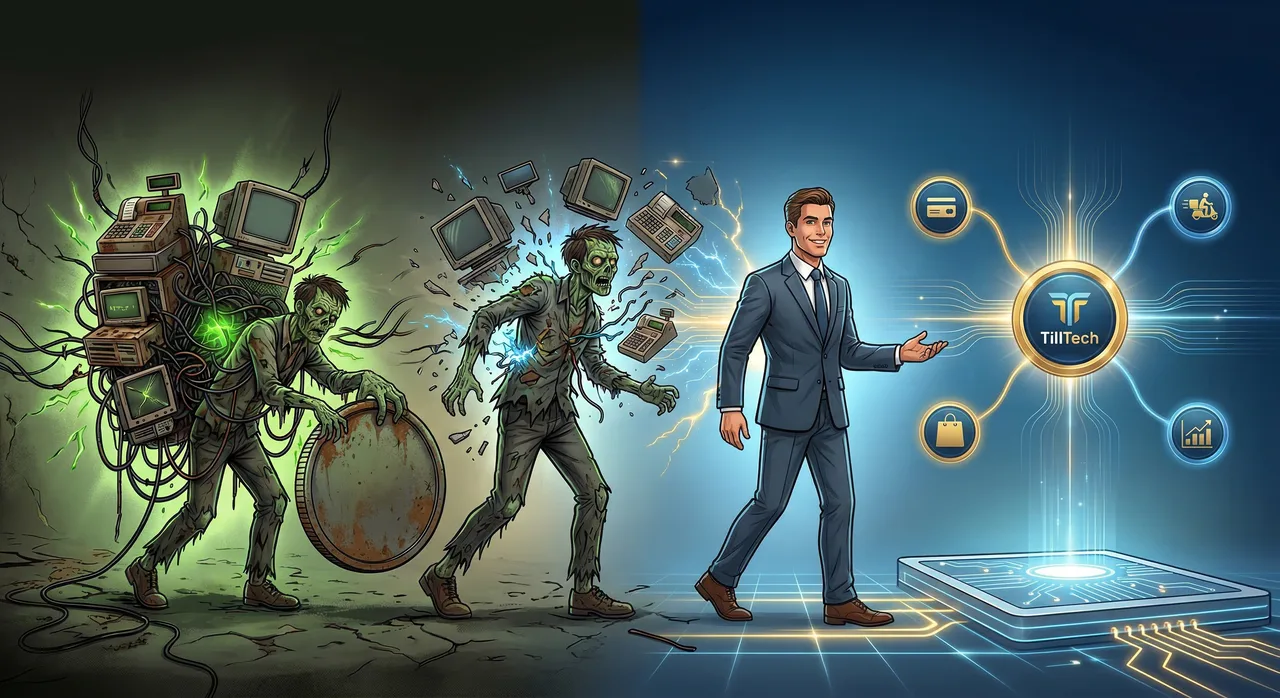
Finding the Strategic Balance
In the modern hospitality and retail landscape, technology is the engine driving the entire customer journey. The promise of the "integrated stack" has been sold as the ultimate solution—a scenario where all your favourite applications magically talk to each other to create a seamless operation.
But for many business owners, this dream has become a costly nightmare. Instead of a streamlined operation, they are managing a convoluted web of hand-offs, data siloes, and spiralling maintenance fees.
At TillTech, our platform is intentionally designed to be comprehensive covering everything from warehousing and multi-site stock management to marketing promotions, staff rotas, and detailed reporting. However, we also recognize that we exist in a wider ecosystem.
So, how do you decide when to look for an "all-in-one" solution, and when it is truly beneficial to introduce a third-party integration?
When NOT to Integrate: The Case for a Unified Platform
Many businesses start with a "base" platform and then "add-on" apps as they grow. One provider for loyalty points, another for self-service kiosks, a separate system for kitchen screens, and another for staff management.
This approach often leads to what we call an "unhealthy stack." Here is why you should avoid integrations for core business functions that can be handled by a single platform.
1. Breaking the Fundamental Customer Journey
If your loyalty program is one integration, your marketing (QR codes and promo codes) is another, and your till is the base, tracking the total customer journey becomes impossible. A unified system allows you to link a promotion directly to a purchase, automatically calculating ROI information. You lose that granular insight when data has to hop between different vendors.
2. High Costs and Maintenance Nightmares
Every separate integration comes with its own monthly subscription, its own API support fees, and its own training requirements. If an API is updated on one end and breaks the connection on the other, you are the one who pays (in time and money) to fix it.
3. Staff Confusion and Training Friction
Teaching staff to manage stock in one system, build rotas in a second, and process orders in a third is inefficient. It leads to errors and increases staff turnover time. A single, intuitive interface for all back-office and front-of-house tasks fundamentally simplifies operations.
4. The "Finger-Pointing" Loop
This is the single biggest frustration for technical teams and operators. If an order from a kiosk fails to print in the kitchen, and your kiosk is provided by Vendor A, your till by Vendor B, and your printer hardware by Vendor C, who do you call? Each vendor will often claim it’s a problem on the other party’s end, leaving you stuck in a maddening technical loophole with no support and an angry customer.
The Rule of Thumb: If it’s essential to your core internal operation (Stock, Warehousing, Staff management, Marketing/Promotions, Reporting), it belongs in one place. It is fundamentally better, not just easier.
When TO Integrate: The Strategic Handshake
There are specific areas where integrations are not just healthy, but necessary for business growth, resilience, and operational efficiency. We believe in being "integration key" for choices that give our users an advantage.
1. Payment Providers (Avoiding Platform Lock-In)
This is a critical integration point. You should never be locked into a platform that allows only one payment processor. If that processor has an outage, your entire business grinds to a halt. Furthermore, as you expand and grow, you may need different processing rates or providers with better international support. TillTech acts as a central hub that allows you to integrate with multiple payment providers, giving you the power of choice and business continuity.
2. Third-Party Delivery Aggregators
Platforms like Deliveroo, UberEats, and JustEat are giants that own massive market shares. You can’t ignore them, but managing them separately from your till system is chaotic (the dreaded "wall of tablets"). This is where an integration shines.
By integrating these aggregators directly into TillTech, you create a seamless workflow. Orders flow directly into your kitchen and stock systems automatically. This saves time, reduces input errors, increases efficiency, and gives you a single source of truth for all your reporting, regardless of whether the customer ordered in-store or on an app.
Visual Summary: Unified vs. Fragmented Systems
Here is a quick comparison showing the impact of choosing between a unified core platform and relying heavily on multiple third-party integrations.
Operation / Feature
Unified Platform Approach (e.g., TillTech)
Fragmented / Over-Integrated Approach
Technical Support
One point of contact. The "buck stops" with the platform provider.
Multiple support teams. High risk of "finger-pointing" blame loops.
Customer Insights
Total visibility of the customer journey from promotion to purchase to review.
Fragmented data. Hard to calculate true marketing ROI or repeat purchase behaviour.
Operational Workflow
Seamless. E.g., a promo code updates stock, calculates ROI, and logs marketing data instantly.
clunky. Data has to sync (or fail to sync) across multiple API handoffs.
Staff Training
One system to learn. High staff proficiency and lower training costs.
Multiple systems with different interfaces to learn. Higher error rates.
System Costs
One predictable subscription fee. Less costly in the long run.
Multiple subscription fees + API maintenance fees on top of base cost.
Data Integrity
Real-time, single source of truth (e.g., stock levels are consistent everywhere).
Data siloes. Risk of delayed or mismatched data syncs leading to errors.
Payment Options
Choice of integrated providers. Protects against lock-in and outages.
(Ideal scenario) If integrated correctly, provides choice and resilience.
Delivery Services
Aggregators integrated for smooth workflow into kitchen and stock.
Tablets everywhere. Manual data entry required, leading to errors and delays.
Conclusion
Integrations should not be used as patches to fix a limited platform. They should be used strategically to connect with external superpowers (like payment choices and massive delivery networks) to make your business more robust and efficient.
By ensuring your core operations—from warehouse to driver management, accounting to reporting—remain unified within a single ecosystem like TillTech, you gain a level of control, visibility, and technical peace of mind that a fragmented stack can never provide.